Top 5 Tips for Choosing Hall Effect Sensors for Your Projects?
Hall Effect Sensors have become critical in various industries, ranging from automotive to consumer electronics. According to the latest market analysis by ResearchAndMarkets, the Hall Effect Sensors market is expected to grow at a CAGR of 7.1% from 2021 to 2026. This growth indicates a rising demand for accurate and reliable sensing technologies.
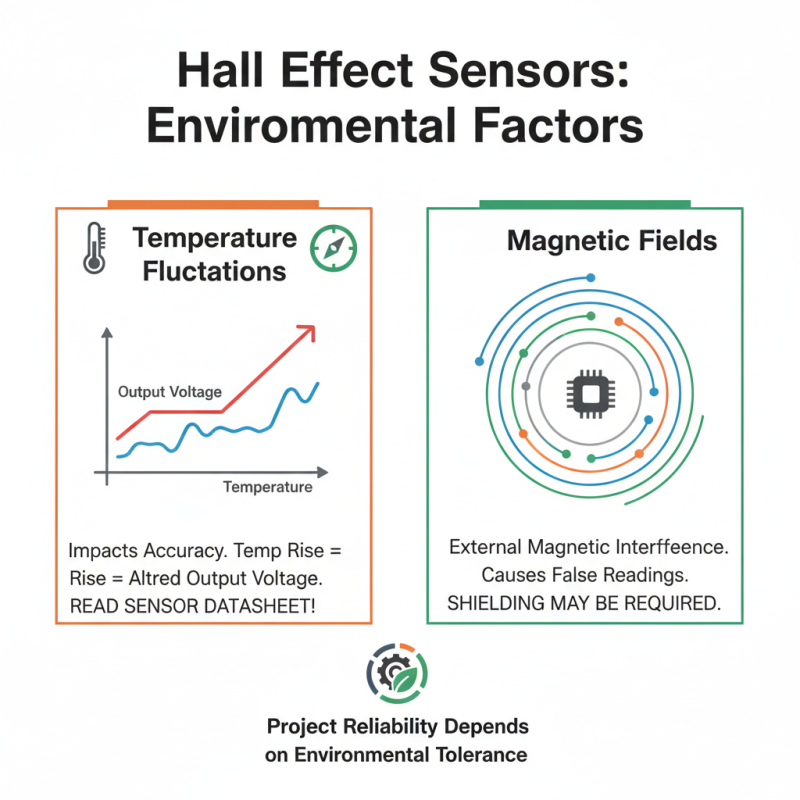
Incorporating Hall Effect Sensors into your projects requires careful evaluation. Each application demands specific sensor characteristics. Understanding factors like sensitivity, linearity, and environmental resilience is essential. Ignoring these details can lead to suboptimal performance. It is vital to assess how your chosen sensor will function under various conditions.
Furthermore, consolidation of authority in the sensor market suggests leveraging reputable suppliers is beneficial. Established brands provide reliability and support that new players may not offer. However, navigating the myriad of options available today can be overwhelming. Reflecting on these considerations can lead to a more informed and successful implementation of Hall Effect Sensors in your engineering endeavors.
Understanding Hall Effect Sensors: Principles and Applications
Hall Effect sensors are crucial in various applications, from automotive to industrial settings. These devices detect magnetic fields and translate these interactions into electrical signals. According to a report by MarketsandMarkets, the global Hall Effect sensor market is projected to reach $2.92 billion by 2025, highlighting their increasing relevance. Understanding the principles behind these sensors can enhance project performance.
When choosing Hall Effect sensors, consider sensitivity. A sensor with higher sensitivity can detect smaller magnetic fields, making it suitable for precise applications. Additionally, pay attention to the sensing range. The right range ensures reliable performance in various environments. Some sensors may struggle with extreme conditions, which can lead to inaccurate readings or failures.
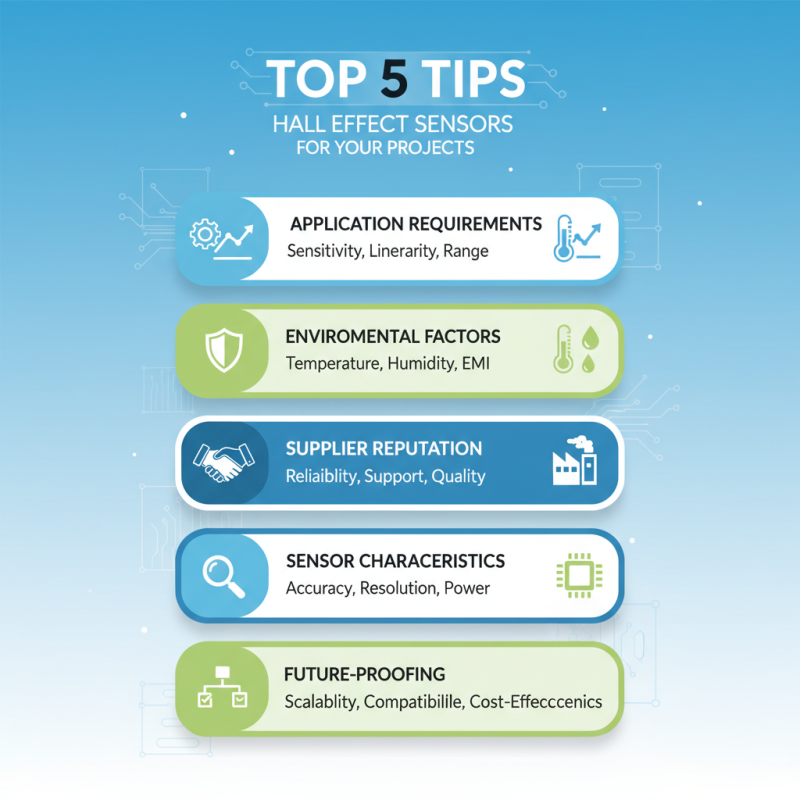
Remember to look at the temperature coefficient as well. Some sensors perform poorly outside specified temperature ranges. This can cause fluctuations in readings, which is not ideal in critical applications. It may be helpful to analyze historical data on sensor performance to identify trends and potential issues. Proper evaluation can lead to better selections for your projects and increase overall reliability.
Evaluating Sensor Specifications: Sensitivity, Range, and Linearity
When selecting Hall effect sensors, understanding sensitivity, range, and linearity is crucial. Sensitivity indicates the sensor’s ability to detect small magnetic fields. A higher sensitivity value allows for optimized readings, especially in low-magnetic environments. Reports show that high-sensitivity sensors can detect changes as small as 1 mT, making them ideal for applications requiring precision.
Range refers to the magnetic field strength that the sensor can measure effectively. A typical range might be from -1000 mT to +1000 mT. Ensuring the sensor range matches project requirements is critical. A mismatch can lead to inaccurate data. For instance, using a sensor with a limited range in a high-power application could result in clipped signals.
Linearity is another essential specification. It defines how proportional the sensor's output is to the magnetic field strength. A linearity error of less than 2% is often desired in high-accuracy projects. Non-linear responses can complicate data interpretation. An understanding of these specifications paves the way for smarter sensor selection and better project outcomes. Each project requires careful analysis, as trade-offs exist among specifications.
Top 5 Tips for Choosing Hall Effect Sensors for Your Projects
| Sensor Model |
Sensitivity (mV/G) |
Range (Gauss) |
Linearity (% of Full Scale) |
| Model A |
50 |
-100 to 100 |
1.5 |
| Model B |
70 |
-150 to 150 |
2.0 |
| Model C |
60 |
-200 to 200 |
1.8 |
| Model D |
55 |
-125 to 125 |
1.2 |
| Model E |
65 |
-175 to 175 |
1.7 |
Choosing the Right Package Type: Surface-Mount vs. Through-Hole
When selecting Hall Effect sensors, the package type can significantly impact your project's success. Surface-mount devices (SMD) are compact and ideal for high-density designs. They allow for smaller PCBs, catering to modern requirements for space efficiency. A study by the IPC (Institute for Printed Circuits) suggests that surface-mount technology has led to a 30% decrease in overall assembly space in recent years.
On the other hand, through-hole components offer distinct advantages. They provide stronger mechanical support and easier handling during assembly. This is essential for projects requiring higher reliability in harsh environments. Some engineers argue that through-hole sensors facilitate easier repairs. SMD parts, however, often demand specialized soldering techniques, which can be a challenge if your team lacks experience.
Consider these tips: Assess the available space in your design. Prioritize durability if your project involves vibration or movement. Also, think about assembly processes. Choosing the wrong package can lead to project delays. Evaluate all aspects to ensure the selected sensor aligns with project goals. The decision may not be straightforward; reflecting on both options will guide you to the best choice.
Cost-Effectiveness: Balancing Quality and Budget in Sensor Selection
Choosing Hall Effect sensors involves balancing cost and quality. When staying within budget, it’s easy to overlook performance metrics. The right sensor can significantly impact your project’s success. A low-cost sensor might seem appealing, but does it meet your project needs? Always assess specifications against your requirements.
Evaluate sensor precision and durability before finalizing your choice. A budget sensor may compromise on critical features, affecting reliability. For instance, consider temperature ratings and response times. Subpar sensors can lead to project delays and unexpected expenses. Quality should not be sacrificed for cost alone.
Understand the long-term benefits of investing in quality. Higher initial costs can result in better performance, reducing maintenance and replacements. Reflect on the overall cost over time rather than initial expense. This perspective can lead to more informed decisions in your project planning.